

Today, in unintentional honor of Presidents’ Day, a deep dive into JFK conspiracy theories. I originally wrote this for last year’s Astral Codex Ten Everything-Except-Book Review Contest, where it only made honorable mention, presumably due to a conspiracy against me.
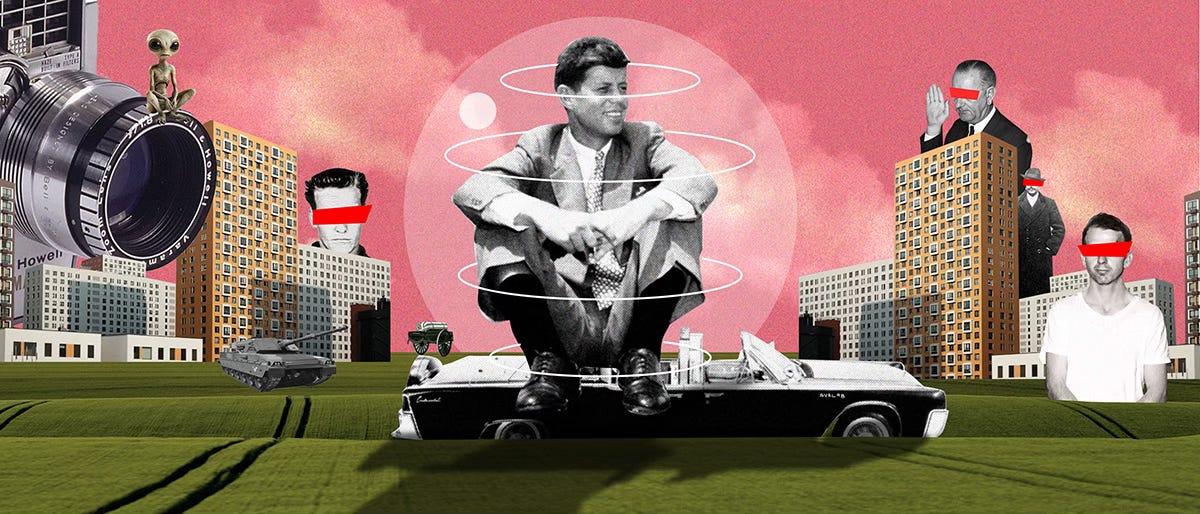
“Things do not ‘happen.’ Things are made to happen.”
—John F. Kennedy
The Behistun Inscription, a cuneiform rock relief carved around 500 B.C. by the Persian king Darius I, tells of a devious plot by the Magi priest Gaumata to seize the throne. After murdering the true king, Gaumata impersonates him and rules in disguise—until the heroic Darius exposes the deception, kills the imposter, and saves the empire.
It’s a great story, at least by 500 B.C. standards. There’s just one problem: it isn’t true. Most historians agree that there never was a Magi imposter—the “false king” was the real king all along. The Behistun Inscription actually depicts history’s first recorded conspiracy theory, most likely spread by Darius himself to justify a coup.
Conspiracy theories may have been born in ancient Persia, but it’s America that elevated them into art. Forget jazz, Broadway, comics, or hip-hop—in my book, conspiracy theories are the true Great American Art Form. This country was practically built for them: start with a deep-seated distrust of authority, stir in the Protestant idea of unmediated access to individual truth, and top with the First Amendment to let it all bloom in public.
You could even say the United States itself was founded on a conspiracy theory: the Founding Fathers wove a tale of powerful elites (King George) secretly plotting against ordinary people (the colonists) to advance a villainous scheme (subjugate them through oppressive taxation and military control). As with many conspiracy theories, there’s a kernel of truth to this story—but the reality is that what the founders interpreted (or spun) as a deliberate plot against them was really just a patchwork of clumsy, improvised policies from a disorganized British government.
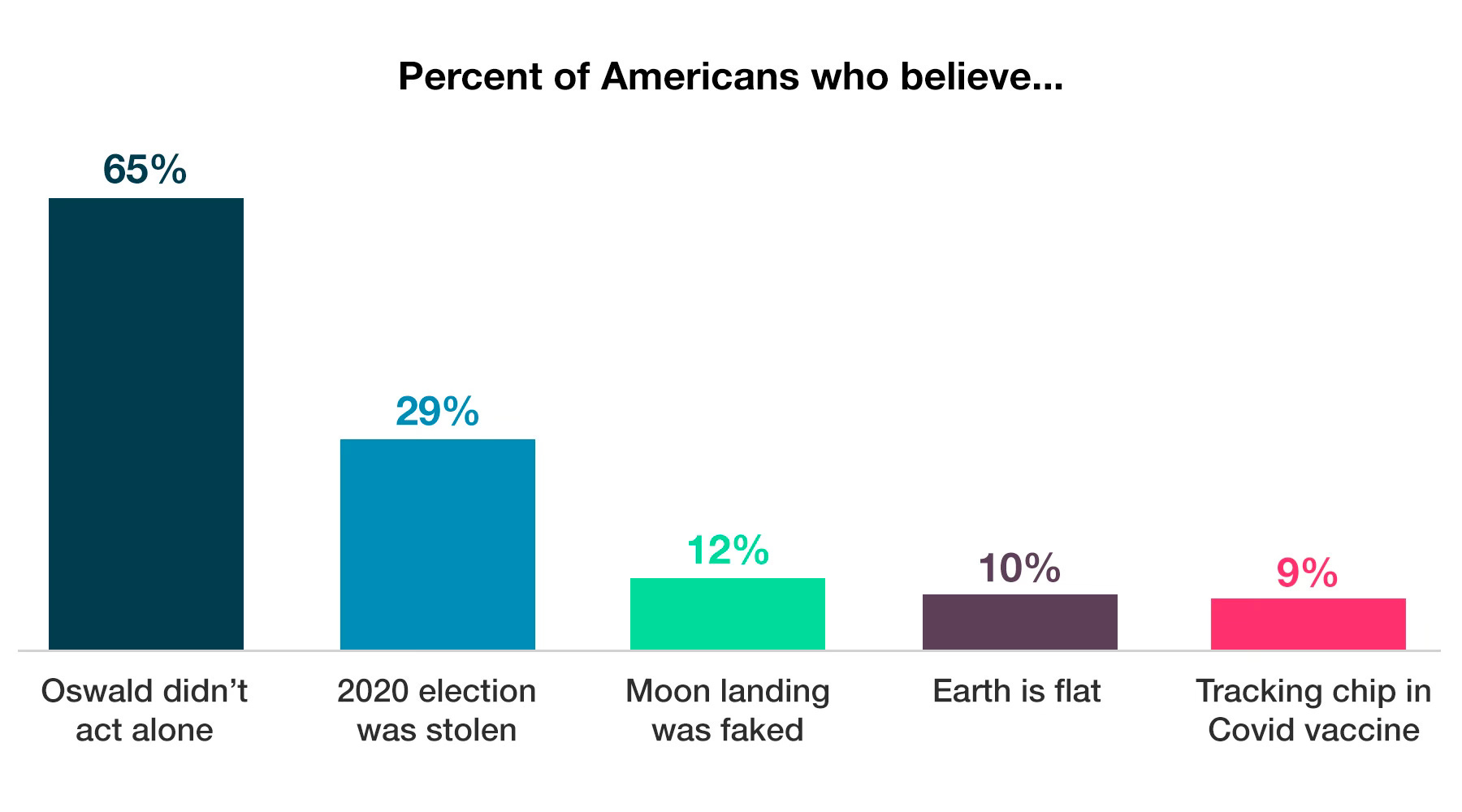
If conspiracy theories are the Great American Art Form, there’s no question as to which is the canonical work of art—our Kind of Blue, West Side Story, Superman, and Illmatic all rolled into one: the theories surrounding the 1963 assassination of our third-best president named “John,” John Fitzgerald Kennedy1. The belief that Lee Harvey Oswald didn’t act alone is the country’s most widely-believed conspiracy theory—if, indeed, it even is a conspiracy theory—sustained across generations and deeply woven into American cultural memory through countless books, movies, and TV shows.
In fact, we even have the Kennedy assassination to thank for the term “conspiracy theory” entering widespread use in the first place: as revealed by a declassified 1967 document, the CIA encouraged the use of the then-obscure phrase as a pejorative term to discredit critics of the official narrative.
In his book Reclaiming History, Manson prosecutor and best-selling true crime author Vincent Bugliosi cites 44 different organizations and 214 specific individuals who have been accused of conspiring to assassinate Kennedy, including the Nazis, the Teamsters, the French OAS, Watergate plotter E. Howard Hunt, and Dr. George Burkley, Kennedy’s personal physician. Needless to say, this review will not manage to investigate all of them. The limits of time, space, and human sanity will sadly constrain me to just ten of the most well-known conspiracy theories, which I will evaluate both for plausibility and—far more importantly—for entertainment value.
But first, let’s take a look at…
What we know for sure happened
Nellie Connally (wife of Texas Governor John Connally): “Mr. President, you can’t say Dallas doesn’t love you.”
Kennedy: “No, you certainly can’t.”
—JFK’s last words
On November 22, 1963, President Kennedy took a break from his busy schedule of shooting amphetamines2, hiding his medical issues from the American public3, and taking teenagers’ virginities in the White House4, to campaign in Texas—which, if you can believe it, was a swing state back then. To secure reelection, Kennedy needed to preserve a fragile coalition of conservative Southern racists and liberal Northern industrialists, a political marriage of convenience already strained even by his tepid, cautious support for civil rights.
As part of this Texas tour, Kennedy was riding in an open-top motorcade through Dallas’ Dealey Plaza, with the Secret Service—at Kennedy’s insistence—following in a second car rather than riding with him5. At 12:30 pm, three shots were fired. Kennedy was hit twice, once in the neck and once in the head. He was rushed to the nearby Parkland Memorial Hospital and pronounced dead thirty minutes later. Texas Governor John Connally, also in the motorcade, was hit in the back, but survived with no long-term injuries.
In a nearby building, police found a gun owned by Lee Harvey Oswald, a local delinquent and prime example of why you should never trust someone with three first names. Oswald managed to leave the scene of the crime without arousing suspicion, then shot and killed a nearby policeman over a minor altercation. He once again escaped without getting caught, only to finally, after all that, get busted for the comically small-scale crime of sneaking into a movie theater without paying. He was arrested at 1:36 pm and immediately denied masterminding the assassination, famously claiming “I’m just a patsy.”
Two days later, an eccentric nightclub owner and Kennedy superfan named Jack Ruby6 emerged from a crowd of reporters in Dallas Police Headquarters, where Oswald was being transferred to county jail, and fired a single, fatal shot. The entire thing was captured on live television, in an unprecedented moment in American broadcast history: the first time a murder was witnessed in real time by the general public.
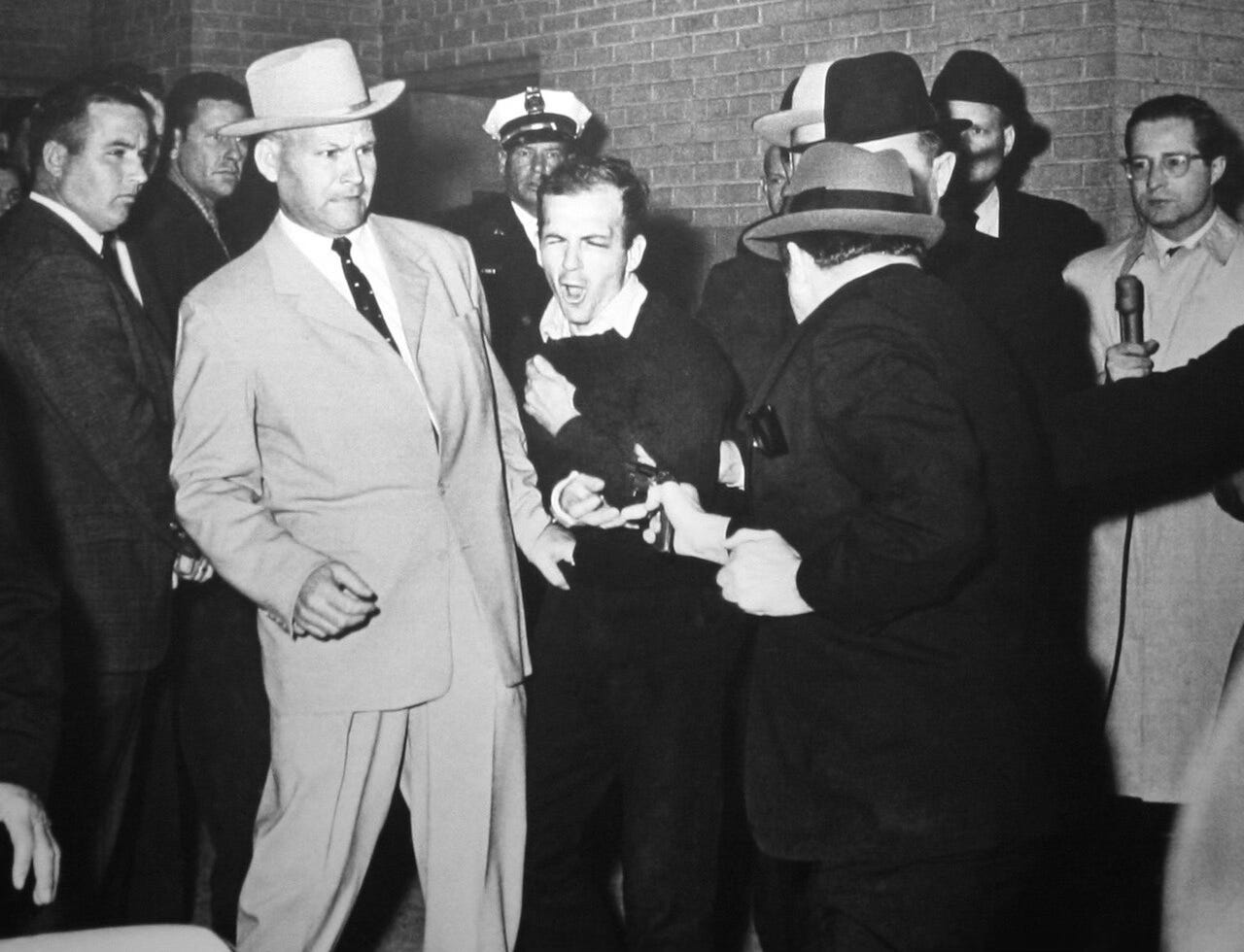
Ruby, who holds a rarified position as one of history’s few (non-Mossad) Jewish assassins, cited two main motives for his actions: the somewhat reasonable desire to spare Jackie Kennedy from the pain of a prolonged trial, and the somewhat less reasonable desire to fight antisemitism by (his words) “showing that a Jew has guts.” The American public, unmoved by Ruby’s self-assigned role as an ambassador of semitic courage, found his actions extremely suspicious. Within days, a Gallup poll revealed that only 29% of the country believed that Oswald acted alone.
One week later, new President Lyndon B. Johnson established the Warren Commission to investigate the tragedy. In September of that year, the Commission—clearly unaware of the number 888’s numerological associations with success and good luck—released an 888-page report concluding that Oswald and Ruby had both acted alone and that there was no evidence for a broader conspiracy behind the assassination. In what became known as the “single-bullet theory,” it concluded that Kennedy’s death and Connally’s injuries had both been caused by the same bullet, as separate bullets would imply a second shooter. The report assigned no motive to Oswald beyond describing him as an isolated, impulsive loser, “perpetually discontented,” with a life “characterized by a lack of meaningful relationships.”
Notably, of the Commission’s seven members, three—Senators Richard Russell and John Sherman, and Representative Hale Boggs—are now known to have had misgivings about their own report. None of them fully bought the single-bullet theory, but the White House pressured them into signing on, despite the fact that LBJ himself secretly doubted the theory as well.
The Warren Commission’s compromised and unsatisfying report completely failed to quell public speculation about the assassination. Another report—that of the House Select Committee on Assassinations (HSCA), released fifteen years later in 1979—muddled the picture even further, concluding that there was a “high probability” of a second gunman and that Kennedy was “probably assassinated as the result of a conspiracy,” though, paradoxically, it also explicitly ruled out every common conspiracy theory7.
Every generation of history nerds and conspiracy diehards has clung to hope that some future document dump will finally crack the case—and every generation has been disappointed. Donald Trump’s much-hyped declassification order ended up revealing almost nothing new, and at this point, barely any relevant documents remain unreleased. It seems probable that we’ll never know with 100% certainty what happened.
But this is America, where a lack of facts never stopped anyone from making wild assertions. So let’s dive into the theories, starting with one of the most common:
The CIA did it
“I want to splinter the CIA into a thousand pieces and scatter it into the winds.”
—John F. Kennedy, venting after the Bay of Pigs
Ever since the humiliating Bay of Pigs debacle—when, in JFK’s view, the CIA had pressured him into a poorly-conceived invasion of Cuba, tried to box him into escalating militarily, and then left him twisting in the wind when the whole thing blew up in his face—Kennedy and the CIA had a strained and distrustful relationship. Ironically, many of his criticisms of the agency echoed those the conspiracy theorists would later make. The CIA was an unaccountable fourth branch of government. It was running its own shadow foreign policy. It withheld crucial information from civilian leadership. After the Bay of Pigs, Kennedy fired the CIA’s top brass, and started building out the Pentagon’s intelligence capabilities in an effort to create a competing power center.
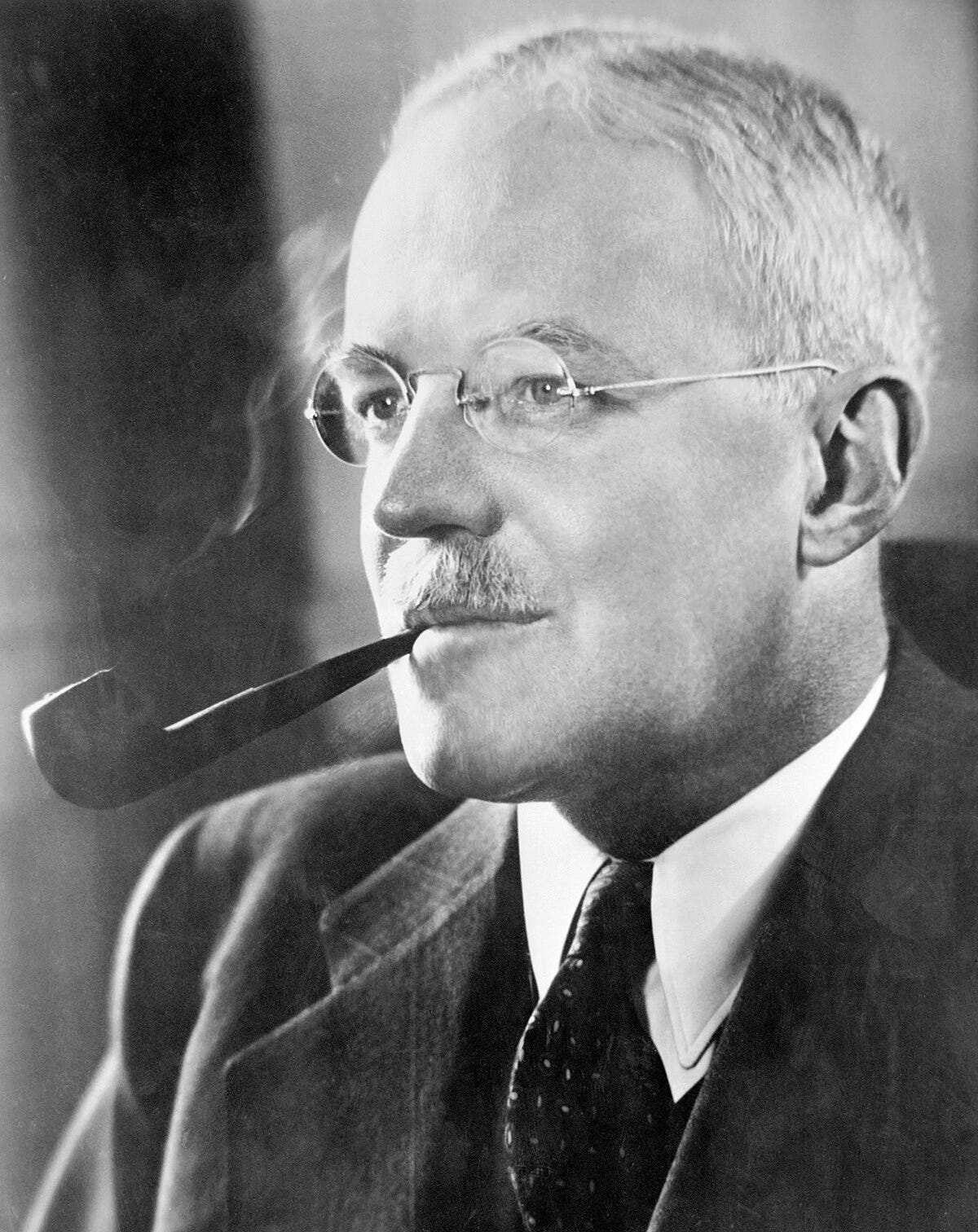
So the CIA had plenty of reasons to dislike Kennedy. But did they dislike him enough to kill him?
One person who suspected they might was Attorney General/nepo brother Robert F. Kennedy, whose first move after the assassination was to give the CIA a call to directly ask if they were involved. (I guess he thought maybe they’d pick up the phone and just be like… “You got us, Bobby! Our bad!”) During his own presidential campaign, he told associates that if he won, he planned to reopen the investigation into his brother’s death. At times, Lyndon Johnson also speculated that the CIA might have had something to do with it.
As with most of these theories, there is no single definitive version of the CIA hypothesis, but the general idea is that the agency, or rogue elements within, used Oswald to eliminate Kennedy because they saw him as a threat to their own interests. The highest-profile public believer in this theory was New Orleans District Attorney Jim Garrison, who in 1966 charged businessman and part-time CIA contact Clay Shaw with being part of the conspiracy. But that case is now regarded as an embarrassing overreach by a hot-headed, media-hungry prosecutor. Shaw was acquitted of all charges in less than an hour of jury deliberation, and a federal judge later ruled that the charges against him had been brought in bad faith. Nonetheless, he remains the only person ever charged in connection with the Kennedy assassination8.
Believers in the CIA theory often cite the agency’s sketchy behavior in the aftermath of the assassination. The CIA certainly acted like it had something to hide—because it did. But it wasn’t hiding a role in Kennedy’s murder. Rather, the CIA was desperate to conceal its string of cloak-and-dagger plots to assassinate Fidel Castro. These probably-unlawful schemes, which tended to fail in comically embarrassing ways, made the agency look both sinister and incompetent. Compounding the problem, it turns out the CIA had long been monitoring Oswald, but had utterly failed to flag him as a potential threat.
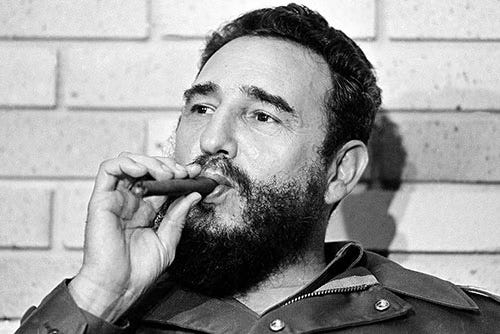
So the CIA lied—or, as the agency later called it, in a masterful example of government doublespeak, “engaged in a benign cover-up,” keeping all of that from the Warren Commission. “If we had known then what we know now,” commission member John J. McCloy later said, “the treatment of the CIA [in the report] would have been quite a bit tougher.”
Lying under oath is never a good look. But even if you’re willing to accept that the CIA would engage in what’s essentially a revenge killing against an American president—at enormous risk to itself—there have been many, many investigations into CIA black ops and abuses of power since 1963. If the agency had been involved, at least a little bit of evidence would have probably turned up by now. So no, the CIA isn’t guilty—at least, not of this particular crime. But their shady conduct following the assassination did them no favors, which is probably why they remain at the center of so many conspiracy theories.
The Cubans and/or Soviets did it
“It would have been absolute insanity…Nobody who’s not insane could have thought about [killing Kennedy]”
—Fidel Castro, 1977 CBS interview
“We’ve got to take this out of the arena where they’re testifying that Khrushchev and Castro did this…and kicking us into a war that can kill 40 million Americans in an hour.”
—Lyndon Johnson, encouraging Sen. Richard Russell to direct the Warren Commission’s speculation away from the communists
In the heated atmosphere of the Cold War, communist plots tended to become the default explanation for every American misfortune, and Kennedy’s killing was no exception. He had stared down Soviet Premier Nikita Khrushchev during the Cuban Missile Crisis and greenlit covert efforts to topple or assassinate Castro. Could Moscow or Havana have decided to hit back by killing him? After all, Oswald did have suspicious communist ties: he briefly defected to the Soviet Union in 1959, then returned to the U.S., with a Russian wife, and became involved in pro-Castro activism.
Believers in this theory point to a quietly unsettling reality: the U.S. government really, really didn’t want to find out that the Soviets had done it. Johnson’s administration feared that accusing Moscow—especially without proof, but possibly even with it—could escalate into nuclear war. They leaned on the Warren Commission not to look too closely into this theory, and the commission obliged.
Still, this version of events runs up against a few inconvenient historical truths. By 1963, Khrushchev’s and Kennedy’s relationship was actually pretty good, at least by Cold War standards—they’d just signed a nuclear test ban treaty, and Khrushchev had praised a recent Kennedy speech calling for a reset in U.S.-Soviet relations. Besides, the Politburo prized stability above all else, seeing unpredictability—especially in foreign affairs—as a direct threat to regime security. American intelligence later confirmed that far from celebrating Kennedy’s death, Soviet leaders were deeply alarmed, even briefly panicking that someone on their side actually had killed Kennedy without running it all the way up the ladder first9. Khrushchev was reportedly so distraught upon hearing the news that he fell to his knees and wept, and even Castro reacted with concern. Associates report that he started frantically asking his deputies what this Lyndon Johnson’s deal was, worried that the next president would be even worse for Cuba.
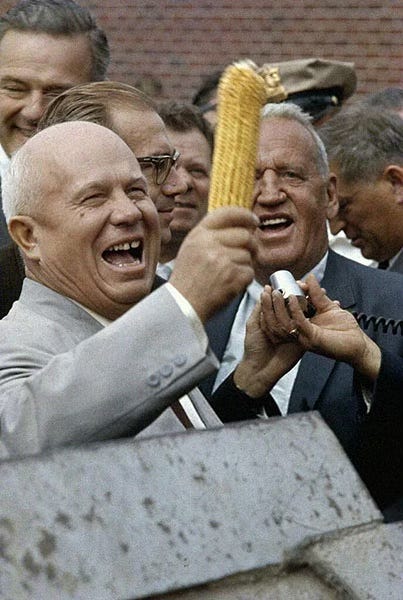
Simply put, the risk-reward calculus for a Soviet or Cuban plot would have been wildly out of whack. The Cubans almost certainly would have been wiped off the map if they got caught killing a U.S. president—Castro himself later said “our country would have been destroyed by the United States” if they’d done it—and both countries would have risked nuclear war.
And to what end? Until 1804—when the 12th Amendment ended the practice of making the election’s runner-up the vice president—the death of a president could conceivably bring a different political faction to power. But today, with the VP hand-selected by the president, their ascension is unlikely to cause major policy shifts. In fact, a lone assassination anywhere is rarely an effective way to achieve political goals. This is why the U.S. only kills other countries’ presidents as part of a broader project of regime change (see: Congo, South Vietnam, Chile, Libya, the Dominican Republic, and probably some other places we don’t know about yet), and why our homegrown assassins tend to be motivated by more realistic goals, like impressing Jodie Foster.
The communists were crazy, but they weren’t that crazy. In the depths of Cold War paranoia, it was understandable that some thought the Soviets or Cubans were involved in Kennedy’s killing—though it’s worth noting that even then, no serious government official ever reached that conclusion. Today, with the USSR long-dissolved and many of its once-secret files revealed to historians, its innocence is undeniable. If you want a good communist conspiracy theory, you’re much better off with the one that says Castro is secretly Justin Trudeau’s father.
The Mafia did it
“I help get Jack elected and, in return, he calls off the heat.”
—Chicago mob boss Sam Giancana, allegedly
The Mafia harbored little affection for American politicians in general, but they especially disliked the Kennedys. Perhaps that was just because Bobby made an aggressive crackdown on organized crime the centerpiece of his tenure as Attorney General. Or perhaps it was because of a deal struck with the mob during JFK’s candidacy: steal Chicago, and thus the 1960 election, for him, and he’d go easy on them as president. The mob complied, but Kennedy welched on the deal—and so, the theory goes, they had him killed.
There are hints of Mafia involvement everywhere you look—and as the wiseguys say, “You smell garlic, you know someone’s cookin’”:
In the months leading up to the assassination, Jack Ruby made a bunch of phone calls to Mafia associates, and after killing Oswald, he received regular prison visits from a mob lieutenant.
Chicago mobster Johnny Roselli, when called to give congressional testimony on an unrelated matter, gave cryptic and suggestive answers that seemed to hint at the Mafia’s involvement, though he stopped short of claiming firsthand knowledge. The next year, a fisherman off the Miami coast found Roselli’s decomposing body in a 55-gallon steel drum, fueling speculation that he himself was killed for knowing too much.
And most tantalizing of all: In the 1980s, New Orleans don Carlos Marcello was captured on an FBI prison bug confessing to “having the son of a bitch killed.”
The circumstantial evidence was compelling enough for the HSCA’s chief counsel, a man with the born-for-government-reports name of G. Robert Blakely. An organized crime expert who’d led the drafting of the RICO Act, Blakely later authored a book, The Plot to Kill the President, which pointed to a Mafia conspiracy. The HSCA report as a whole didn’t blame the Mafia directly, though it left room for “the possibility that individual members may have been involved.” However it happened, Kennedy’s death did result in the feds turning down the heat: Lyndon Johnson booted Bobby Kennedy from the Attorney General’s office and replaced him with Nicholas Katzenbach, who deprioritized anti-Mafia efforts in favor of civil rights.
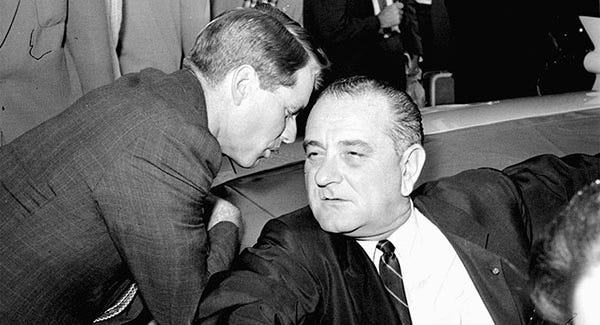
The backroom election-theft plot makes for a great story—but it probably didn’t happen. Yes, there was voter fraud in Illinois in 1960, as in pretty much every midcentury election there. But it was concentrated in Chicago, where Mayor Daley’s machine was powerful enough that the additional involvement of the mob—already in decline by the sixties—wouldn’t have been necessary. Even if the Mafia could have swung the election, it’s absurd to think they’d trust Kennedy—especially with his brother, the country’s top anti-mob crusader, by his side. And if they had struck a deal, why kill JFK but leave RFK untouched?10
Of course, the Mafia could have come for Kennedy even in the absence of a secret election-theft deal. But this would have been a big departure from their usual behavior: unlike their Sicilian counterparts, the American Mafia historically went out of its way not to kill politicians, knowing that to do so would bring potentially existential law enforcement scrutiny. The most prominent political figures known with certainty to have been killed by the mob are all city aldermen—going from those nobodies to the president would be an enormous leap.
As for all the circumstantial evidence? Well, it was hardly out of the ordinary for a midcentury nightclub owner to have Mafia contacts. Nor was it out of the ordinary for Mafia bigshots like Marcello to play fast and loose with the truth if it makes them seem more powerful—or to simply start getting their facts mixed up when they’re sick and near death, as he was when his comments were recorded.
Nonetheless, this remains the most plausible of the major conspiracy theories—one that’s just waiting to be made into a Scorsese movie. The Mafia had the means and the motive, and they aren’t shy about killing people.
Lyndon Johnson did it
“He’s mean, bitter, vicious—an animal in many ways.”
—RFK on LBJ
“I’ve had more women by accident than he ever had on purpose.”
—LBJ on JFK
In a crowded field of backstabbers and power-grabbers, Lyndon Johnson takes the crown as America’s most ruthless president. Among other things, he froze out longtime backers forever over the smallest slights, almost certainly stole the 1948 Texas Senate election, and established dominance over his aides by making them join him in the bathroom to take dictation while he sat on the toilet.
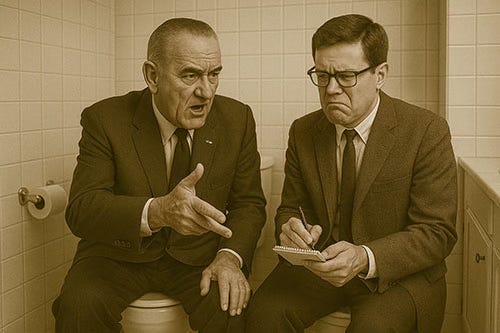
And although he never made Kennedy watch him poop, their relationship still ranks among the most dysfunctional of any modern presidential team. Kennedy never liked Johnson and only picked him to secure Southern votes; Johnson, in turn, felt disrespected and marginalized. He was excluded from key decisions and mocked by Kennedy aides, who called him “a political barnyard animal,” and came up with awesome nicknames for him like “Uncle Cornhole” and “Huckleberry Capone.” “They treat me like I’m some kind of bastard at a family reunion,” LBJ said, later referring to the Vice Presidency as “the worst damn fool mistake I ever made.”11
The Roman consul Cassius said that to solve a crime, you should first ask “cui bono?”—who benefits? By that measure, Johnson—the single largest beneficiary of Kennedy’s death—should be suspect #1. In 1963, Johnson was in serious political and even legal danger due to a corruption investigation into one of his longtime aides that was getting close to implicating Johnson himself, and leading Kennedy to consider dropping him from the ticket. But the assassination instantly shifted the political dynamics. Congress couldn’t stomach investigating a new president during a time of national mourning and crisis, and the inquiries dried up overnight.
Of course, plenty of people profit from events they didn’t instigate. In the decades since Johnson’s presidency, we’ve been gifted with an endless stream of unflattering details about him: his corruption, his habit of whipping out his dick in front of congressmen and reporters, his many extramarital affairs, his insistence on having a custom shower installed in the White House that would blast water directly onto his ass12. But the only “evidence” that’s ever surfaced tying him to the assassination is a sketchy deathbed claim by Watergate burglar Howard Hunt, a known perjurer who had previously derided conspiracy theorists and supported the Warren Report’s conclusions.
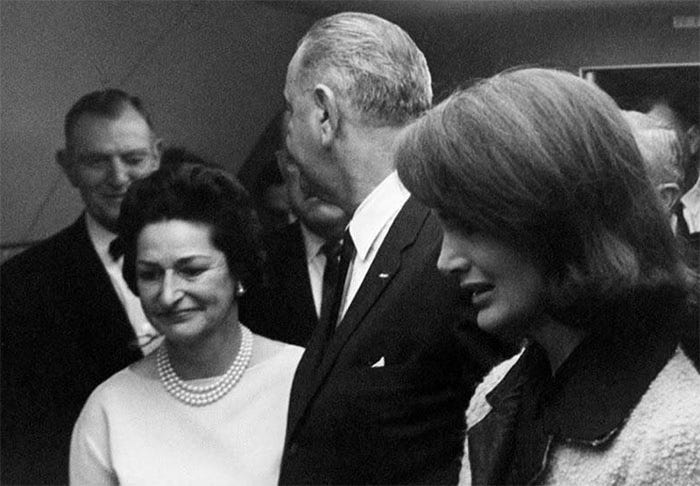
Besides, Johnson spent the year between his ascension and his 1964 landslide consumed by self-consciousness about being an accident who hadn’t earned the presidency in his own right; given how much he feared being seen as, in his words, “a pretender to the throne,” it’s unlikely that he would have intentionally elevated himself in such a manner. It’s even less likely that a man as calculating as Johnson would have Kennedy killed in such a public, attention-grabbing way—and in Johnson’s home state, no less!—rather than, say, having him quietly poisoned in the White House. A sitting vice president—one of the most heavily-surveilled people in the country—plotting to kill the president would require an enormous and airtight conspiracy, one almost certainly beyond the means of even a master schemer like Lyndon Johnson.
Or, to put it another way: if this had happened, Robert Caro would have definitely found out about it by now.
The military-industrial complex did it
“If we do what they want us to do, none of us will be alive.”
—Kennedy on advice from the Joint Chiefs of Staff
The best conspiracy theory villains are powerful, shadowy groups whose exact contours and membership remain stubbornly vague: the Illuminati, the Freemasons, the lizard people, the… military-industrial complex? Everyone thinks they know what the military-industrial complex is, but no one can really explain it, which makes it an ideal bogeyman. Why would it—whatever “it” is—come for Kennedy? Well, it’s simple: he was scaling back the Cold War, getting us out of Vietnam, and thus threatening the profits of Big Military.
There are certainly shreds of truth here. Kennedy wasn’t particularly hawkish, at least by the standard of U.S. presidents: he pushed for a nuclear test ban treaty and back-channeled peace feelers to Castro and Khrushchev, and he resisted some of the Joint Chiefs’ more aggressive proposals. More importantly, his most ardent defenders insist that had he lived, there would have been no Vietnam War—he had reportedly approved plans to withdraw U.S. advisors from Vietnam after the 1964 election, though whether he would have actually followed through is an open question13.
Ultimately, this theory is so broad that it’s hardly a theory at all. Blaming Kennedy’s assassination on the military-industrial complex is like blaming social ills on “society” or “the system”—it might make you sound smart to the guy next to you at the bar, but it doesn’t really explain anything. It’s also not very entertaining, since a good story needs characters. That’s probably why the depictions of this theory in pop culture—most famously Oliver Stone’s JFK, but also the lesser-known, Dalton Trumbo-written Executive Action—tend to have the military guys as secondary actors, typically working with the CIA and/or the Mafia and/or communists.
The military-industrial complex theory is basically the CIA theory’s lamer, more boring cousin. It has all the same holes—but at least the CIA has a track record of assassinating world leaders.
Israel/the Jews did it
“Having written a book on such a ‘controversial’ topic as the JFK assassination, with a highly ‘sensational’ thesis, has proven quite an adventure. It’s brought me a lot of new friends—and lots of enemies, too!”
—Michael Collins Piper’s surprisingly chipper introduction to his 750-page polemic blaming the assassination on Israel
Sooner or later, every conspiracy theory circles back to two suspects: aliens and the Jews. (Don’t worry, we’ll get to the aliens soon.)
In this theory, the Israeli government—working, of course, with “world Jewry”—killed Kennedy over his opposition to Israel’s nuclear weapons program. You can read all about it in a sprawling book by Michael Collins Piper, a Holocaust denier who also blames Israel for, among other things, killing Martin Luther King Jr, doing 9/11, controlling the American Mafia, and—most devious of all—promoting political correctness.
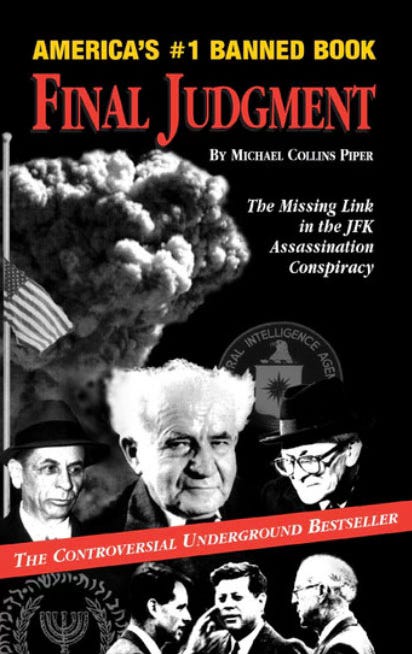
What separates this theory from your run-of-the-mill antisemitic nonsense? Well, the Mossad really are master assassinators, and it’s true that Kennedy didn’t want Israel to get nuclear weapons, though his stance was rooted in a broader anti-proliferation philosophy rather than anything specific to Israel. But, obviously, the Israelis didn’t kill Kennedy, they didn’t do 9/11, and if Collins Piper had ever talked to an Israeli, he’d certainly know they’re not exactly fans of political correctness either. This isn’t even the best Mossad conspiracy theory—that award goes to the one about their agents training sharks to attack Egyptian tourists.
This theory is perhaps most interesting for its bizarre mirror twin, in which the real killers are anonymous gentiles who orchestrated the assassination specifically to frame the Jews. The main believer in that idea? None other than Jack Ruby himself14.
The bankers did it
“I guess I’d have to say that my biggest asset is my father’s money.”
—John F. Kennedy, joking around with aides during his 1946 congressional campaign
If blaming the Jews is too openly antisemitic for you, why not try pointing the finger at (winks suggestively) powerful financial interests? Perhaps they can be based in (winks grow more frantic) New York? And what if they also (winks now resemble a full-body twitch) happen to own a few media properties?
In 1963, Kennedy signed an obscure executive order relating to the Treasury Department’s authority to issue silver certificates. This was a routine, administrative document that went uncovered by the media and unnoticed by the public—until decades later, when conspiracy theorists seized on it as providing the key to understanding the assassination. They claimed that the real purpose of Kennedy’s order was to strip power from the Federal Reserve, leading influential financiers—in most tellings, Rothschilds and/or Rockefellers—to have him offed so they could reverse his monetary policies.
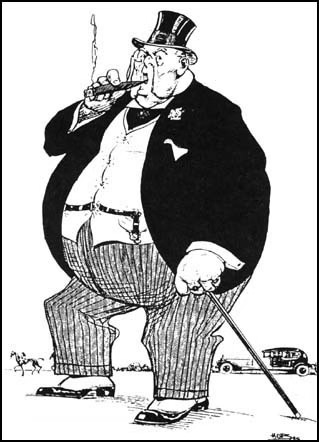
The irony of “powerful financiers” being behind the Kennedy assassination is, of course, that Kennedy himself came from a family of powerful financiers. He was our second-wealthiest president (after Trump)15, and his administration was generally pretty friendly to finance and business. Besides, this allegedly Fed-threatening Executive Order did nothing but delegate already-existing powers to the Secretary of the Treasury—C. Douglas Dillon, a Republican and former investment banker who was himself also a powerful financier.
So while it’s fun to imagine JFK as a martyr to populist monetary policy, in reality, he was more Goldman Sachs than gold standard, and it doesn’t make sense to think the bankers would have targeted one of their own.
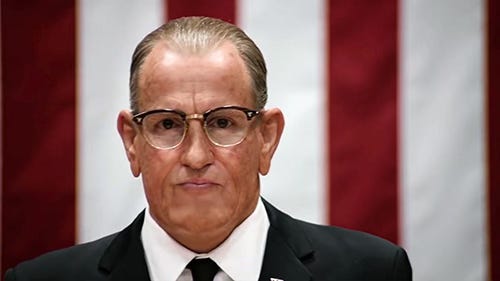
Woody Harrelson’s dad did it
“I killed Kennedy! I killed Kennedy!”
—Charles Harrelson (during a cocaine bender, later recanted)
A lifetime ago in 2016, Trump accused Ted Cruz’s dad of being involved in the Kennedy assassination. But there’s another, wilder theory involving a different famous guy’s dad: Charles Harrelson, Woody’s father, who really was a contract killer.
Harrelson was convicted of multiple murders for hire, including the assassination of a district judge on behalf of a drug dealer about to be sentenced16. He “confessed” to killing Kennedy near the tail end of a six-hour standoff with police, but then later recanted the confession, explaining that he had been out of his mind on cocaine at the time.
The full story of the standoff is pretty epic. From a Texas Monthly article about Harrelson:
[Harrelson] had been driving down I-10 in the desert somewhere east of Van Horn, shooting cocaine and seeing agents’ faces on highway signs. He stopped to inspect a rattling muffler, which he attempted to repair by shooting it with his .44 magnum. In his drug-induced dementia, he missed the muffler but managed to shoot out a rear tire. Motorists reported a crazed hitchhiker standing on the highway with a gun pointed at his head; when the police arrived they discovered Charles Harrelson. He held them off for six hours, pressing the muzzle of the .44 against his nose.
Very few people actually believe Harrelson was involved with Kennedy’s killing. And look: who among us hasn’t done too much blow and confessed to being the second shooter, right? But he was a convicted murderer—and he did (briefly) say it was him—so he gets an honorable mention.
Aliens did it
“We choose to go to the moon in this decade and do the other things, not because they are easy, but because they are hard, and because we want to meet moon aliens.”
—real, historically accurate quote from John F. Kennedy
Kennedy had access to secret files revealing the existence of UFOs and alien life. And unlike with his serial infidelity, his severe health problems, and his covert escalation of American involvement in Vietnam, he believed the public had a right to know the truth. But the aliens preferred to stay in the shadows, so they had him killed. Or, alternatively, Kennedy was working on a groundbreaking human-alien partnership, which other interests (NASA, the CIA, anti-alien bigots) opposed—so they had him killed. This probably didn’t happen, but come on—you can’t write about conspiracy theories without at least mentioning aliens.
Besides, this theory’s biggest promoter has a name that’s so on brand I couldn’t leave it out: Jim Marrs. You can’t make that up! But you can make up the idea that aliens killed Kennedy, which they didn’t do.
The Secret Service did it—by accident
“Tragedy is when I cut my finger. Comedy is when you fall into an open sewer and die.”
—Mel Brooks
What if there was a second shooter—and it was the Secret Service? Oswald missed, and the fatal shot was actually fired by an agent riding in the follow-up car behind Kennedy, who picked up his rifle and, in the chaos, accidentally discharged it into the president’s head. If the funniest outcome is the most likely, then this is definitely what happened.
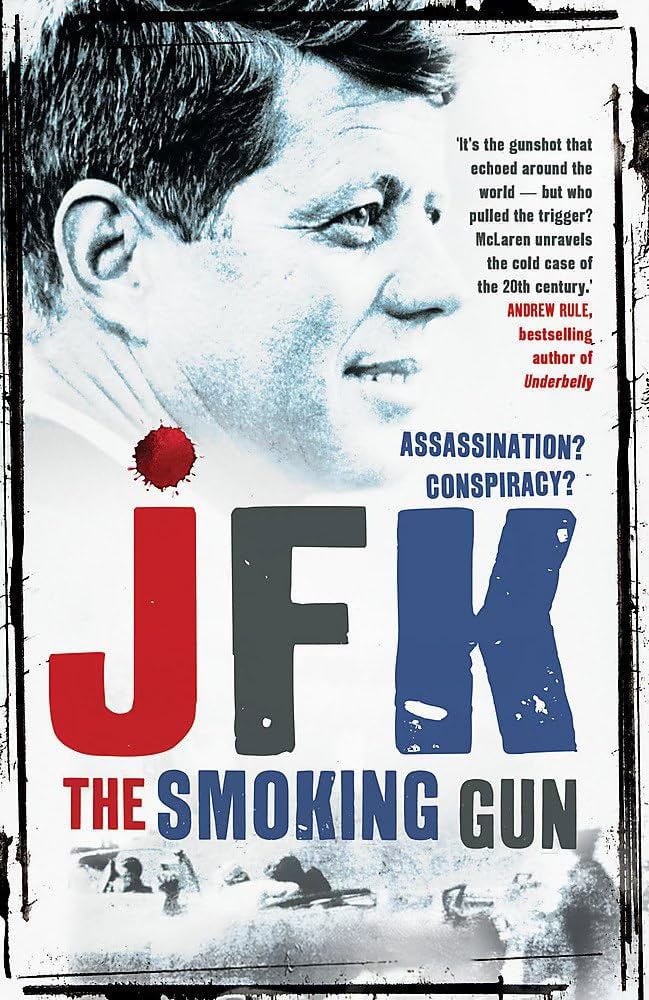
Even the legal battle surrounding this theory is comic. Its main promulgator is a Kansas City journalist by the unusual name of Bonar Menninger, who grew skeptical of the official story after participating in the totally normal leisure activity of recreating the shooting using live ammo. But Menninger didn’t just blame “a Secret Service agent” in his book: he blamed a specific guy, Special Agent George Hickey. Hickey sued Menninger for defamation, but he waited too long to file the lawsuit and his case was dismissed. The legal clock was restarted on a technicality when the book came out in paperback, at which point Hickey sued again and reached a confidential settlement with the publisher. But Menninger had the last laugh: after Hickey died in 2005 and could no longer file lawsuits, Menninger repackaged his claims into a documentary called JFK: The Smoking Gun.
The best part of this theory is the way it makes absolutely everyone angry. Obviously, all the experts find it completely implausible—with hundreds of witnesses to the assassination, you’d think at least one of them would have seen Hickey’s gun go off. The diehard conspiracy theorists, meanwhile, all hate this theory because it’s incredibly unsatisfying, and because it doesn’t actually answer the big question of why Oswald attempted to shoot Kennedy in the first place. In fact, it’s really not a conspiracy theory at all: by blaming a dumb accident, it manages to reject both the Warren Report and the idea of a broader plot. This theory is fucking hilarious and the fact that everyone hates it makes it by far my personal favorite.
Conclusion
“You know, if someone really wanted to, it isn’t very difficult to shoot the president. All you have to do is get up in a high building with a high-powered rifle and there’s nothing anybody could do.”
—John F. Kennedy, morning of November 22, 1963
A young, popular American president is shot and killed in full view of the public. After a brief manhunt, the gunman is caught—only to be killed himself soon after. There is never a trial. Conspiracy theories flourish almost immediately, with fingers pointed at wartime enemies, shadowy government agents, and even the slain man’s own vice president. It seems everyone has a different story—and nobody knows who, or what, to believe.
The year was 1865, and the president’s name was Abraham Lincoln. Yet within a few decades, these conspiracy theories would fade away, and the official narrative would become so accepted that most Americans today have no idea there were ever others. The Kennedy story, by contrast, still stubbornly resists closure. Since the Warren Report’s release in 1964, the percentage of people who accept its conclusions has never made it above 50%. Throughout this essay, I’ve continually referred to the idea that Lee Harvey Oswald didn’t act alone as a “conspiracy theory,” yet among the general public, that is actually the mainstream view. It’s really the official narrative that’s the fringe belief.
Until researching this review, I was one of the majority who didn’t buy the official story. For most of my life, I would have said essentially the same thing as that unsatisfying 1979 House Select Committee report: I didn’t know who killed Kennedy, but I doubted the official narrative contained the whole story. It just felt too implausible: a conveniently dead suspect, a witness pool riddled with contradictions, and sworn testimony from intelligence agencies who we know weren’t telling the whole truth.
But having now gone deeper down the Kennedy rabbit hole than any sane man should go, I’ve been convinced otherwise. To butcher Winston Churchill: Lee Harvey Oswald acting alone is the worst explanation for the Kennedy assassination—except for all the others17.
It’s not just that every specific conspiracy theory has good arguments against it. All of them, even the most plausible, suffer from the same fatal flaw: using someone as unreliable as Oswald as your assassin makes no sense. Here was a mentally unstable guy with a history of violent outbursts who couldn’t even defect to the Soviet Union right, and who, after the assassination, basically begged to get caught, shooting a cop in broad daylight and then deciding this was a good time to go see a movie right by the scene of the crime. As Kennedy himself eerily foreshadowed, a competent assassin probably could have killed the president and gotten away with it—as, indeed, many people believe happened with the alleged second shooter. But if the second shooter was real, why even bother with Oswald? Competent conspirators would have never enlisted Lee Harvey Oswald, and incompetent conspirators wouldn’t have been able to keep their scheme a secret for the past six decades.
The conspiracy theorists do get a few things right. There was a cover-up—but it was just the CIA covering its own ass. High-level government officials did go into the investigation favoring some explanations over others—but it just so happens that the scenarios they were most afraid of really didn’t happen. The Warren Commission didn’t get the whole truth from all of its witnesses—but it got the core story right anyway.

This sucks, and I’m pretty bummed about it.
After all, the official narrative is deeply unsatisfying, and accepting the government’s version of events just feels so… uncool. I came of age in the George W. Bush era, when distrusting the experts and assuming the government was always lying were hallmarks of the left. Sometime in the Trump years, that all flipped. I already find myself cheering for Liz Cheney and defending the FBI. Now I have to tell everyone the Warren Report is accurate? When did being on the left become so fucking lame?

Earlier in this piece, I said that the person who benefitted most from Kennedy’s assassination was Lyndon Johnson. But that wasn’t quite right. There’s someone who benefitted even more, and his name was… John Fitzgerald Kennedy. Or at least, his legacy benefitted.
In case it’s not obvious from the tone of this review, I think Kennedy is a wildly overrated president, one whose reputation rests more on what he represented than what he actually accomplished. And that reputation would not have survived a second term intact.
Kennedy’s tenuous strategy of trying to have it both ways on civil rights—courting Black voters with promises while placating segregationists with inaction—wouldn’t have remained viable through 1968. Eventually, he’d have had to deal with Vietnam one way or another, and both options were bad: either fully own the war, or withdraw and be blamed for handing a win to the communists. His growing health problems would have become harder and harder to conceal: it’s not implausible to think that if Oswald had missed, Kennedy’s Addison’s disease would have finished the job before his second term was out. And his near-daily philandering, already an open secret in Washington, probably wouldn’t have stayed a secret through the late sixties, when increasing public cynicism and the rise of investigative journalism radically changed the norms of what the press would cover.
In his death, Kennedy became a symbol, an empty vessel onto which people can project their hopes and dreams. And this symbol is way more powerful if his death was the result of a conspiracy. If shadowy groups wanted Kennedy dead, that must mean he would’ve been a transformative president, martyred just as he was about to deliver racial justice, or end the war in Vietnam, or dismantle the CIA, or reveal the truth about aliens.
There are a lot of reasons the Lincoln conspiracy theories died down while the Kennedy ones live on—a simpler story, a slower and more fragmented media ecosystem, a collective desire to put the Civil War behind us. But a big one is that Kennedy’s killing collided with the end of widespread American trust in government and the beginnings of the so-called “post-truth era.”
From today’s vantage point, it seems comically naive that anyone involved in the Warren Commission ever thought an official government report was all it would take to stamp out conspiracy theories. But 1964 was a different time: 77% of Americans back then said they trusted the federal government to do what is right “just about always” or “most of the time.” That was the highest that number has ever been. Over the next few years, it began a sharp downward plummet, and except for a brief and probably illusory post-9/11 spike, it hasn’t crossed 50% since. Today, it stands at just 22%.
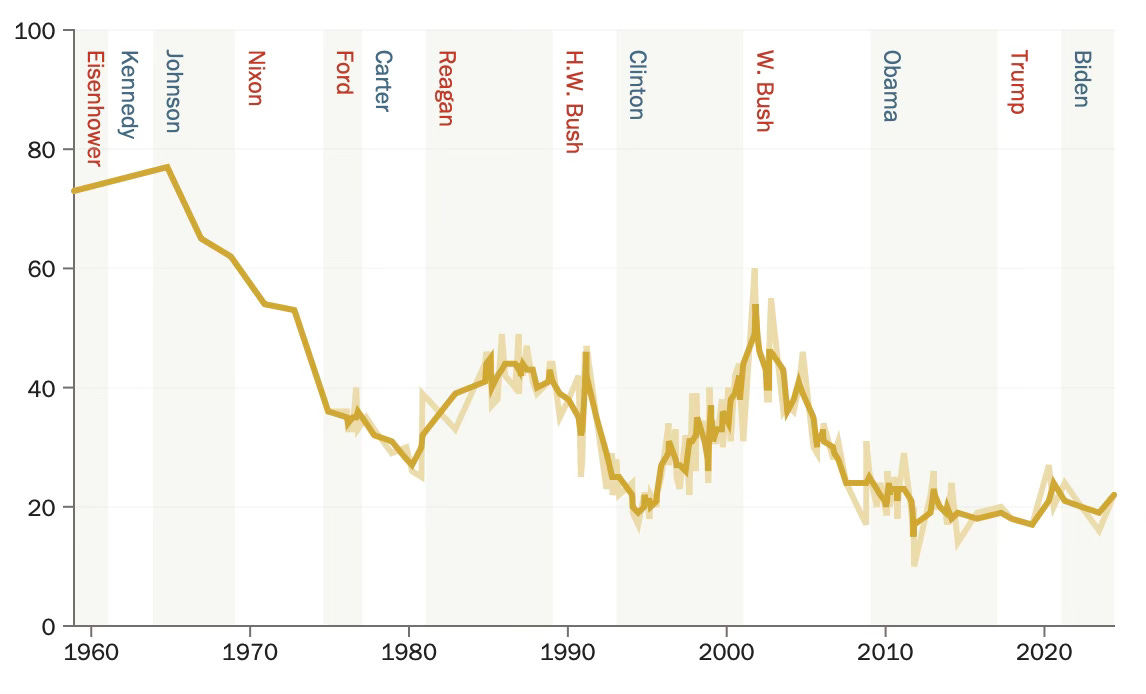
If a president were assassinated today, would there be anything but conspiracy theories? Could you even get a bipartisan cross-sample of respected politicians to align on a Warren-style report? The 35% of us who believe the official Kennedy story is high compared to what we’d get if a modern-day Lee Harvey Oswald pulled a similar stunt.
You might expect that I’m telling you all this as a prelude to bemoaning the state of things today, as is the current trend. But I’m not complaining—I like living in a country where dissenting worldviews flourish and everyone’s a skeptic. Or at least, I’m pretty sure it’s the better of two bad options. After all, we lost our trust in government for good reason: because the government consistently abused that trust.
Besides, a vibrant and innovative culture requires an unruly, freethinking society. The Kennedy theories are, in their own crazy way, an emblematic example of American creativity and imagination. The country whose citizens consistently report the highest trust in their government is Singapore, and while they get a lot of things right, I’d rather live here—with graffiti on our buildings, buskers on our subways, and conspiracy theories on our minds.

In one final irony, Jack Ruby was never held fully liable for killing Lee Harvey Oswald. He was convicted and sentenced to death, but this was overturned on appeal, and he was granted a new trial, only to conveniently fall ill and die before the new trial could begin. Legally speaking, Ruby died an innocent man—a fittingly unsatisfying coda to a story as messy and irritating as America itself.
You made it all the way to the end! Thanks for reading. If you liked this piece, please let the world know by popping the heart button at the bottom. (I hate asking for likes so blatantly—I guess I wouldn’t be a good politician—but it really does help other people discover my writing.)
If you liked this piece, you might also like some of my other tumbles down American politics rabbit holes:
Book Review: The Outlier

Everything you didn’t realize you wanted to know about Jimmy Carter, including his early-career fake racism, the White House glove rebellion, and the Great Balloon Failure of 1980. At 6,000 words, this article is almost longer than Carter's actual presidency!
Public Interest Law and the Paradox of Justice by Lawsuit

In which Ralph Nader kickstarts a new kind of political activism and accidentally paralyzes the government.
I’d rank him below both John and John Quincy Adams, but above John Tyler and John Calvin Coolidge, who’s better known by his middle name.
Kennedy received regular amphetamine injections from Max Jacobson aka “Dr. Feelgood,” who also “treated” Elvis Presley, Marilyn Monroe, Leonard Bernstein, Judy Garland, Humphrey Bogart, Elizabeth Taylor, Cecil B. DeMille, Liza Minnelli, Tennessee Williams, and Truman Capote, among others. It was actually Kennedy’s Secret Service who coined the “Dr. Feelgood” nickname.
Kennedy suffered from a host of serious health problems, including chronic back pain, Addison’s disease (a potentially life-threatening adrenal disorder), and frequent gastrointestinal issues, all of which he concealed from the public. His speed injections began as a supposed “treatment” for these issues. It even seems likely that Kennedy’s back issues were indirectly responsible for his death: under his suit, he was wearing a stiff back brace, which likely prevented him from ducking under fire.
One of the teenagers in question, Mimi Alford, wrote a tell-all book in 2012.
A file declassified in 2021 quoted Kennedy as rejecting Secret Service supervisor Floyd Benis’ plan for agents to ride in the main car: “It’s excessive, Floyd. And it’s giving the wrong impression to people. We’ve got an election coming up. The whole point is for me to be accessible to the people.”
A few of Ruby’s more entertaining eccentricities: 1) At the nightclub he owned, he would regularly intervene in choreography and change dancers’ costumes himself. 2) He referred to his dachshund Sheba as his “wife.” 3) He had a habit of taking off his shirt and pounding his chest in public, seemingly at random.
Compounding the uncertainty, a 1982 report from the National Academy of Sciences concluded that one of the key pieces of evidence in the HSCA report was probably misinterpreted.
Garrison’s case was not only legally shaky, it was also wildly homophobic. Shaw—who was closeted until the prosecution outed him—was smeared and stereotyped throughout the trial, which used his participation in underground gay life to paint him as a sinister and malicious figure.
After confirming their own lack of involvement, Soviet leadership also concluded that Lee Harvey Oswald didn’t act alone. They blamed far-right extremists within the U.S.
For the time being, at least…
It’s hard not to feel bad for Johnson here, who essentially seems to have been on the losing end of a White House class war, earning the ire of Kennedy’s young, rich, East Coast staffers not for any of his political positions but just for being Southern, ill-mannered, and of poor stock.
I swear the shower thing is true. Look it up.
The withdrawal plan was based on assumptions—most notably, the resilience of President Diem’s soon-to-collapse South Vietnamese government—that were quickly overtaken by actual events. Johnson signed a similar memo, but that didn’t prevent him from escalating the war as the situation on the ground changed.
In interviews and jailhouse conversations, Ruby repeatedly insisted that “the Jews” were being blamed for Kennedy’s death, and that darker forces had manipulated the entire situation to provoke a pogrom.
If you want to get nitpicky, Kennedy was only our second-richest president when including family money. He had effectively unlimited access to, but did not technically control, the Kennedy family fortune.
The judge, John H. Wood Jr, had earned the incredibly cool nickname of “Maximum John” due to his propensity for handing down unusually long prison terms.
This is a good time to share the old joke about the JFK conspiracy theorist who dies and goes to heaven, where God offers to answer any question he has about the universe. Obviously, our conspiracy theorist asks, “Who really killed JFK?”
“Lee Harvey Oswald,” God tells him, “acting alone.”
Our man’s eyes go wide. “Wow,” he says. “This goes even higher up than I thought!”
What a great weekend read. Illuminating as well as witty. Thanks for your deep dive on our behalf.
My favorite detail about that day is the forecast was for rain. It did slightly drizzle in the morning, it was windy, and the top was on the Presidential limo. But the rain stayed away. It was an unusually warm sunny day for late November. At 11:38am, JFK told the secret service to remove the top so people could see him better.