

Ovation inflation
This is my term for the way audiences have started giving standing ovations at the end of every theatrical performance, no matter how uninspired, in the bizarro-world mirror of the way every economic transaction now invites you to leave a tip. But at least someone actually benefits financially from tipping—standing ovations are entirely symbolic, so if they become expected, all we’ve done is replace regular applause with something much less convenient. (Though you can still tell a true standing ovation from the half-hearted, peer-pressured-into-it kind, as the latter always starts with an overly enthusiastic minority and is followed only gradually by the remainder of the audience, a few at a time, as they reluctantly choose not looking like an asshole over than their integrity.)
But actually, I suspect that this rise (ha) in standing ovations doesn’t even have anything to do with showing appreciation for a good performance. My pet theory is that this all started when a few people realized that by standing early they could get a head start on the rush to the bathroom, and then things just kind of spiraled out of control from there.

Drivers who don’t use their turn signal
The thing that really pisses me off about this is its wildly out-of-whack ratio, as compared to other inconsiderate driving maneuvers, of personal benefit to inconvenience inflicted on others. When someone cuts me off going 100 mph, I am of course irritated, but I get what’s in it for them: driving fast is super fun! A hardcore utilitarian might even argue that the speeding driver’s pleasure outweighs the minor annoyance he causes the other nearby drivers (ignoring, as utilitarian thought experiments often do, other factors like the risk of accidents).
But where’s the joy in not using your turn signal? We’re talking about a near-effortless flick of the wrist here—you have to place so little value on the experience of other drivers to be unwilling to move your hand a few inches for them.
It’s like the difference between stealing someone’s wallet because you want their money, and stealing someone’s wallet and then throwing it in the trash just for kicks. Both are crimes, but only the latter is the mark of a true monster.

The term “late-stage capitalism”
This trendy phrase is actually much older than people think. It was coined in one of history’s most fertile environments for new lingo and ideologies (1920s Germany, baby!), and it has a much nicer ring to it in the original German. (I’d be 100% on board if we were all still calling it Der Spätkapitalismus.) The fact that this term is already a hundred years old nicely illustrates my main objection to it, which is that we have no idea what stage of capitalism this is! For all we know, it could still be early!
You’d think we would have all learned something from the lexicological debacle of “modern” art now meaning art from 60+ years ago, but apparently not. Besides, 99% of the time you see “late-stage capitalism” in an essay, it isn’t part of some well-considered Marxist argument about capitalism inevitably collapsing under the weight of its own contradictions; it just means something like, “capitalism, but also you should know that I, the author, am cool and hold all the right opinions.”
I, this author, am also cool and also hold all the right opinions, but at least I have the decency to just tell you that outright.

All living Kennedys
Author’s note: the last time I wrote about the Kennedys, I received many angry comments from crazy Kennedy fans/conspiracy theorists. If you’re a crazy person, please skip this section.
The Kennedys have always been flawed, but at least in JFK’s day they represented youth, vigor, and a generational turning of the page in American politics. Now they’re just nepo babies, or nepo babies’ babies, who have all the same flaws as the originals—the entitlement, the womanizing, the reckless thrill-seeking—but none of the charm, like a Xerox of a Xerox. They don’t even have the cool accents anymore!
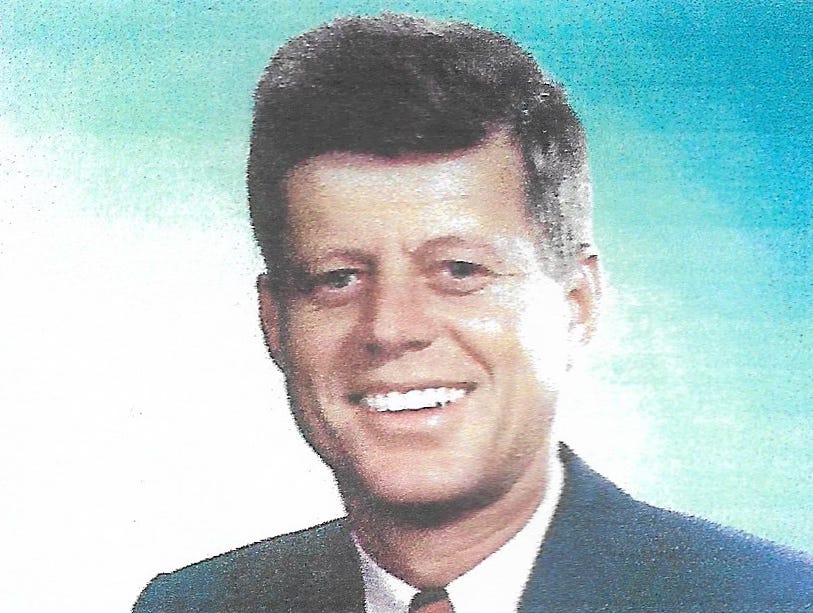
And instead of symbolizing the best of American politics, they now symbolize the worst: our addiction to rehashing the same tired old candidates and tropes. It was crazy for Jeb! to look at the political landscape in 2016 and conclude that what Americans really wanted was another Bush. It’s even crazier for someone like Jack Schlossberg to look around now—when this country’s contempt for its political establishment has grown so obvious that even Gavin Newsom, a two-term governor who began his political career in his twenties and grew up family friends with the Gettys, is pitching himself as an outsider—and conclude that what people really want is the continuation of an eighty-year-old political dynasty by someone with no apparent skills or accomplishments besides tweeting about how hot is own grandmother is.
At least RFK Jr. was a genuinely accomplished environmental lawyer back in the day. If he wasn’t JFK’s grandson, Jack Schlossberg would be selling weak coke to aspen ski bums or abandoning his a podcast about “modern masculinity” after three episodes. And also, I’m sorry, but being a Catholic named Schlossberg is so ridiculous that it’s basically disqualifying. If this guy actually gets elected to Congress I’m going to go full Peter Thiel and lose what little faith in democracy I have left.

Rap songs where the twist at the end is that they’re talking about something different than what you originally thought
Corniness is always a risk in a genre so reliant on puns and wordplay—a lot of classic rap songs, even by masters of the form, are actually incredibly dumb if you listen to the lyrics too closely. And the corniest move a rapper can pull is the twist ending, where a song that seems to be about one thing is revealed by its last line actually to be—surprise!—about something else entirely.
This was maybe a passable move the first time someone came up with it: Common’s 1994 “I Used to Love H.E.R.,” where the narrator’s laments about how the object of his affections has changed for the worse are not, as you’re led to assume, about a woman, but in fact about… wait for it… hip-hop itself1. Though the twist is undercut by the way Common blatantly cheats in the setup: if you’re going to rap about “the way her titties hung,” it’s pretty weak to turn around at the end and be like, Psych! It wasn’t a girl at all, it was hip-hop the whole time! M. Night Shyamalan he is not.
By the time we got to Atmosphere’s 2008 hit “Yesterday” (seemingly about a bad breakup, actually about his dad dying) and Eminem’s 2010 “25 to Life” (literally the exact same twist as the Common song, no titties though), this trope had overplayed itself into self-parody. The real twist ending in all these songs is that they start out seeming pretty good, but actually, it turns out they suck.

Asking why poor people vote against their economic self-interest
Whenever the working class votes Republican, you hear the same comment from a certain type of self-satisfied liberal: how did these poor fools once again get conned into electing someone who’s going to cut the social safety net they rely on all so he can lower rich people’s taxes? It’s assumed that if these uninformed voters (duped, perhaps, by a spooky bogeyman called “misinformation”) could simply be made to see that they’ve been voting against their own economic self-interest, they would immediately slap “Bartlet for President” bumper stickers on their cars and go cast ballots for Elizabeth Warren.
But the person making this argument is almost always an upper tax-bracket Democrat who themselves votes against their own economic self-interest. When a millionaire votes for a Democrat, no one thinks they’re too stupid to understand which party’s policies would most thicken their wallet; we understand that people factor more into their vote than their personal finances. People of all socioeconomic levels are allowed to see outside their own narrow class interests, not just the rich.

Tea
This country was practically founded on throwing tea away. If you don’t like the taste of coffee, then drink Bawls or Cocaine like a real adult.
If you didn’t hate this post, throw me a like below. And if you want to hear about more things I hate, you might be interested in this piece from almost six (!) years ago. Come for the headline, stay for the incredibly dated references to the 2020 election.

“H.E.R.,” it turns out, stands for “Hip-Hop in its Essence is Real.” Is your mind blown yet?
Sitting ovation as I am busy eating my Candy for Breakfast. May I add a few more, as you got all these right? The obligatory encore. OK tge show was good, why do we need to always ask for more? Let the performer go home, and then the audience can also go home. You’ve had enough cake. No one needs to cut up a new cake. Enjoy what you had and go home.
Now if the show is not good, use my convenient Sandwich Rule. If the mere thought if having a sandwich ( you can substitute a slice if pizza ir hot fudge sundae) is better than the boring crap you are watching, then pull the goalie, and you invoke the Sandwich Rule. Leave now. Why wait? Leave now and go get yourself that sandwich.
Thanks for your tasty laughs this morning.
The more I read, the less I write. I am invoking the “I just ate my Candy For Breakfast ( Mini- Wheats) and can now make coffee and toast.
On the same hate thing as not using the turn signal. Here in the UK I hate lane hoggers. On a three lane motorway (highway if you’re in the US), the two outer lanes are for overtaking, not pootling along as if you don’t have a care in the world and annoying other road users.