

Today, a rarity: (allegedly) practical work advice, adapted from a talk I gave at my actual job.

The word “brainstorm” emerged in the mid-1800s as a colloquial term for a violent mental disturbance. It was repurposed to its current meaning in the 1940s by an advertising executive1, but if you’ve ever been forced to participate in a bad one—and who hasn’t—you’ve probably found yourself confronting the term’s original definition.

But in (mild) defense of all the torturous brainstorming sessions I’ve suffered through over the years: coming up with new ideas—even bad ones!—is hard, and creating a space that helps other people come up with ideas is even harder. That’s why journalists are constantly asking artists where they get their ideas from2, and why so many people report having their best insights in the shower, or at the gym, or in some other situation where they’re not actively trying to be creative.
Running a good brainstorm means going to extremes to force people out of “work mode” and create a container where creativity and play can flourish. Here are a few principles that might help you do so.
I. Make it weird

The first step in forcing participants out of work mode is signaling immediately that your brainstorm will be totally unlike a typical meeting. And the best way to do that is to make every single aspect of it a little weird. You can do this in big ways (like writing strange prompts—more on that momentarily) and in small ways (like giving the calendar event an off-putting name). The specifics don’t even really matter—the point is just to knock people off their axis a bit. The weirder you act as the leader of the session, the weirder you give everyone else permission to be.
II. Require pre-work
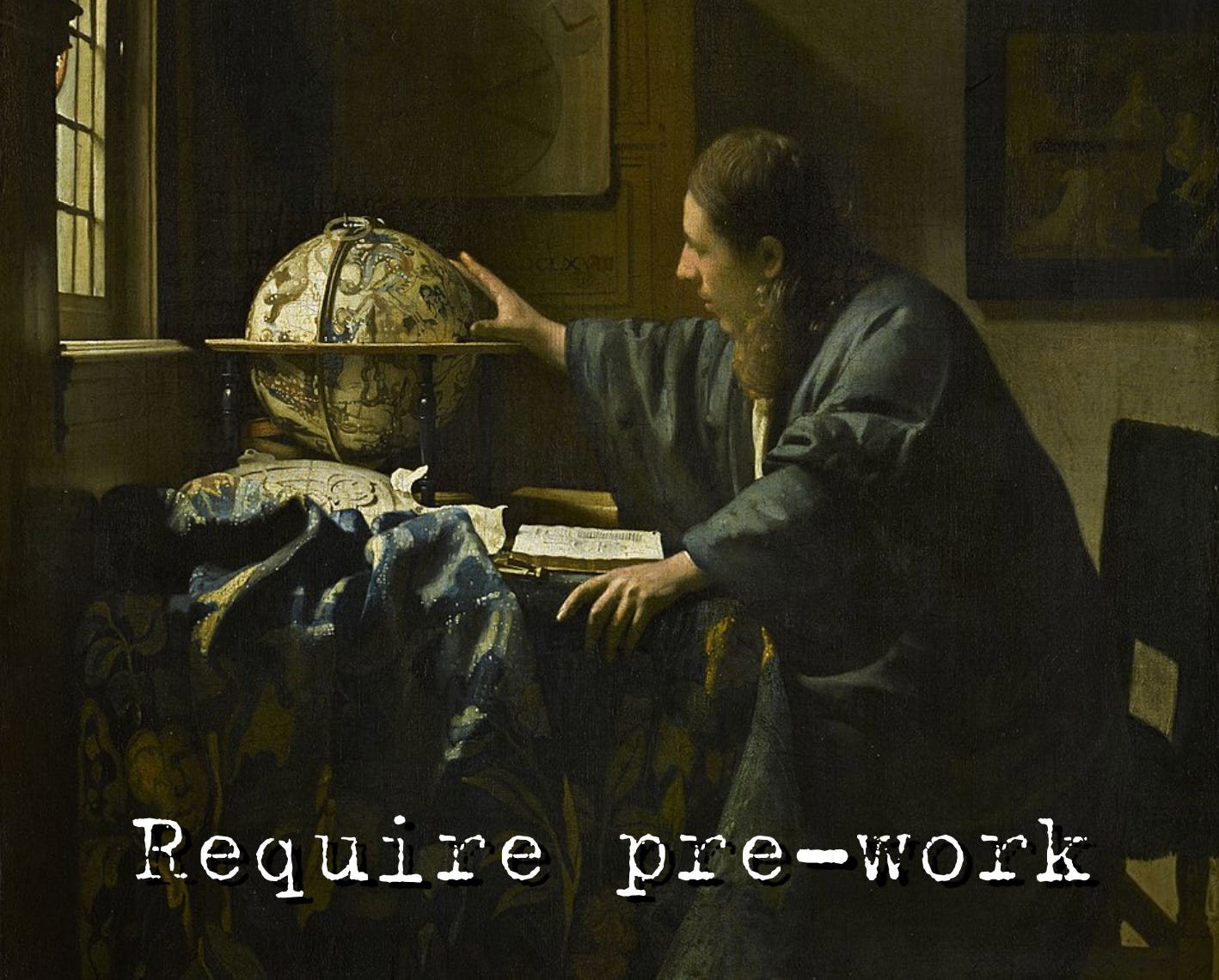
Quick—come up with five ideas for an essay. Go! Now! Hurry!
Not so easy, right? It’s basically impossible to come up with ideas on command. Yet somehow we often forget this at work. We pull our colleagues into a Zoom or conference room and we ask, “Hey, got any ideas for [whatever]?,” and then we’re surprised when they don’t give us anything good.
You need to give people time to think—and, just as importantly, time to not think, but to let ideas percolate in the back of their subconscious. So, before any brainstorm, I send everyone a one-pager with an overview of the problem and a few prompts.
Sometimes I actually require that participants write down a bunch of ideas in advance (and I’m annoyingly strict about this—if you don’t do the pre-work, you can’t come!). Other times, the one-pager is just to plant some context in people’s heads, no output required. Either way, what matters is that no one is starting from zero when they walk into the room.
III. Impose structure

Another reason you probably couldn’t just come up with those ideas I asked you for in the previous section: “come up with some ideas” is an incredibly vague prompt. It’s so vague, it’s like… uh… some other thing.
Constraints inspire creativity. So the more specific your prompts, the more creative people will be. Some adaptable prompt constraints I like:
How would we do this if we couldn’t spend any money, or had to spend some obscene amount?
How would we do this in a way a lot of people would definitely hate?
How would we do this if we were [insert celebrity or historical figure here]?
How would we do this if we couldn’t use language?
How would we do this if the goal wasn’t to succeed, but to fail in the most interesting way possible?
You get the idea.
IV. Quantity over quality

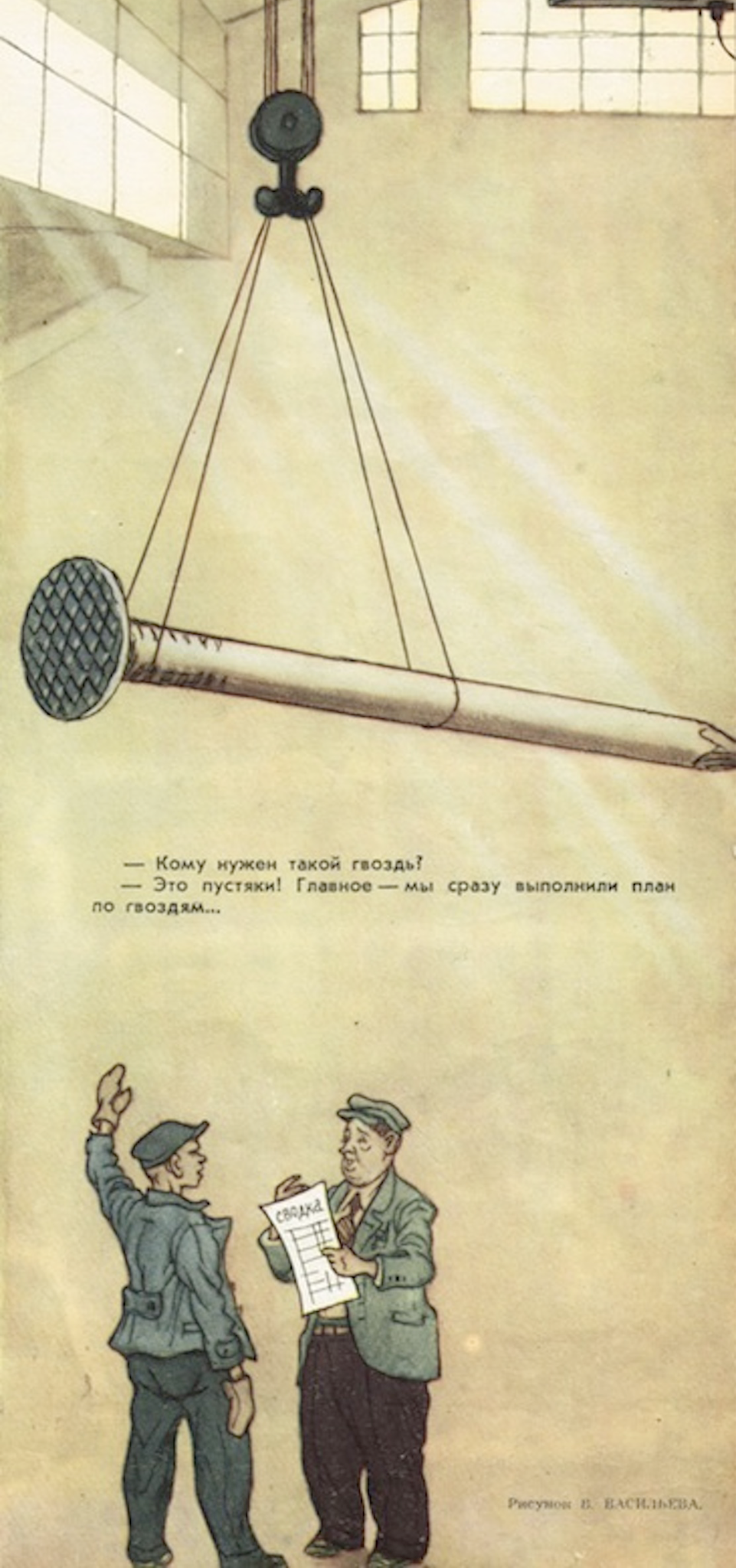
Here’s a story, from the book Art & Fear, that everyone who knows me has heard me tell like 10,000 times: once upon a time, there was a pottery teacher who divided his class into two groups. The first group would be graded on quality: they had the entire semester to produce one perfect pot. But the second group would be graded entirely on quantity. The teacher wouldn’t even look at their pots; he’d just dump them all onto a scale, like how the Soviet Union measured factory output by weight and Goodhart’s Law’d themselves into ending up with a bunch of huge, useless nails.
You can probably guess where this is going: the “quantity” group not only produced the most pots, they also produced the best pots. Freed from worrying about quality, they churned out pot after pot, and either they rapidly improved—learning and iterating after each attempt—or they just made so many pots that they eventually got lucky.
As with most too-cute-by-half parables, chances are this one never actually happened, but it’s instructive nonetheless. Whenever I run a brainstorm, I emphasize that our goal is to generate as many ideas as possible, with a willful disregard for their quality. Often, to really rub this point in people’s faces, I award prizes to the person who came up with the most ideas, and to the person who came up with the worst idea. Sometimes, the worst ideas are so bad they’re good!
V. Withhold (most) judgment

Along those lines: it’s essential that a brainstorm be primarily about generating ideas, not evaluating them. Nothing kills the creative spirit more than some naysayer in the room pointing out that your latest idea is logistically impractical, or cost-prohibitive, or offensive to basic notions of human decency, or illegal in thirty-seven states.
That said, one can of course take this principle too far. (In college, I was in a creative writing workshop where all judgments were prohibited, and I was reprimanded for accidentally saying “whoa, cool!”—very annoying.) I think it’s fine to let people compliment ideas, but you definitely want to avoid letting anyone slip too far into evaluative mode. A good heuristic: it’s okay to engage with ideas on their own terms, but you should avoid succumbing to premature realism by considering practical constraints too early.

VI. No decisions

Whatever you do, don’t make any decisions during a brainstorm.
Obviously, at some point in the process, someone (probably you) will need to make some decisions, but even if you think you’re ready to do that during the brainstorm—for example, let’s say you’ve identified the top ideas, and now you want to task people with fleshing them out further—it’s better to wait and follow up right after the brainstorm ends. Once decisions enter the building, idea generation tends to exit.

Follow these principles, and I guarantee that all of your brainstorms will end with participants popping champagne and immediately updating their LinkedIn profiles to reflect their historic accomplishment. Overwhelmed with emotion, many will weep; others will retire on the spot, certain nothing they do for the rest of their careers could ever top this moment. Or, at the very least, your coworkers won’t hate you.
If you enjoyed this one, you might like some of my other writing about work:
The Secret to Doing Anything Is Wanting It Bad Enough

What we can learn about procrastination and personal growth from the I-95 bridge repair.
Sorry I Forgot to Enjoy Myself, I Was Too Busy Eating Glass

The hard thing about constantly saying you’re doing hard things.

A surprising number of common words and phrases were invented or popularized by advertisers. A few of my favorites:
Soap opera: coined by Procter & Gamble
When it rains, it pours: popularized by an ad campaign for Morton Salt
Now you’re cooking with gas: originated as propaganda for the natural gas industry
Always the bridesmaid, never the bride: invented for a Listerine commercial
There’s a whole cottage industry of writers coming up with snarky responses to the “Where do you get your ideas” question. Some of my favorites: “Schenectady,” “the idea of the month club,” and my all-time favorite, “I think of them.”